What We All Have In Common

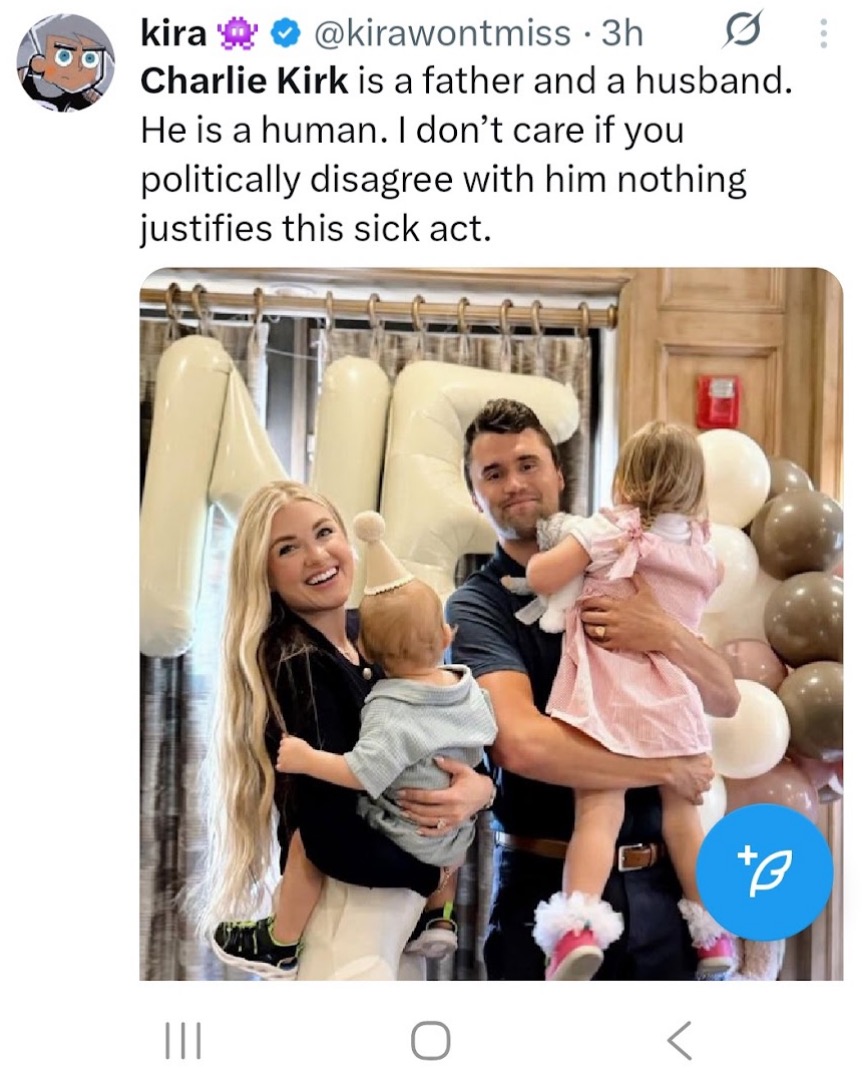
Charlie Kirk was shot and killed yesterday. His wife, Erika, lost her husband yesterday. His two children, both under the age of five, lost their daddy yesterday. Lord, have mercy.

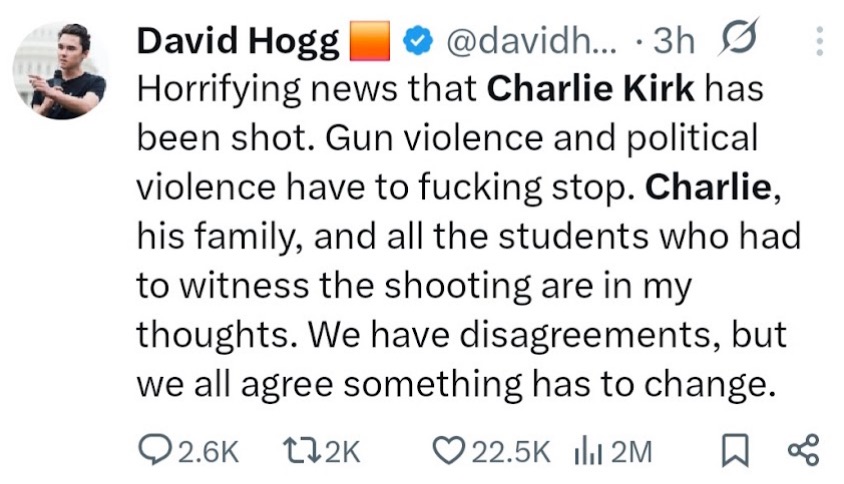
I was on Twitter yesterday between when he was shot and when he was pronounced dead, looking at how people were responding, and I saw exactly what I expected. There were a few left-leaning people saying really ugly things—celebrating that he got shot, or saying that he deserved it. There were some right-leaning people saying ugly things about left-leaning people as a whole—that they’re all celebrating this, that shooting people for their ideas is what the left does. But the vast majority was left-leaning and right-leaning people both saying that nobody deserves to be a victim of political violence, naming Charlie’s and his family’s humanity, and hoping he would survive.

We have real, weighty disagreements with one another in this country—on abortion, and on any number of other extremely important things. It’s important not to minimize or ignore that. But it’s also vitally important to see what we do have in common. If you lean right politically, hear a fellow conservative say: Left-leaning people abhor shooting people for their political beliefs just like we do. That’s not a left thing or a right thing, that’s a human thing.

There are a few crazy people on the left who like political violence, and a few more who say things that sound like they like it because they want to be edgy and get views. There are also a few crazy people on the right who like political violence, and a few more who say things that sound like they like it because they want to be edgy and get views. Don’t let the crazy people pit the rest of us against one another. We have enough things to be divided over without adding this one vital thing that we’re actually on the same side on.


The post What We All Have In Common originally appeared at the Equal Rights Institute blog. Subscribe to our email list with the form below and get a FREE gift. Click here to learn more about our pro-life apologetics course, “Equipped for Life: A Fresh Approach to Conversations About Abortion.” 

Rebecca is the Director of Scholarship at Equal Rights Institute. She is a PhD candidate and former teaching assistant in philosophy at the University of Southern California, where she also cofounded and co-led the student pro-life club.

A sought-after speaker, Rebecca frequently delivers lectures all across the country at academic conferences, colleges, churches, high schools, and other events.

Rebecca’s favorite part of her work at USC was teaching both her philosophy students and her pro-life club members how to cultivate mutual, respectful dialogues with people they disagree with. That work has led her to the strong conviction that if we can teach one side of an issue how to approach dialogues well, people on the other side will very often follow suit, so that we really can radically transform the state of public discourse on abortion just by helping the pro-life side to have a better approach: we can create a culture where people on both sides value each other more and perceive the truth more clearly, and ultimately we can change more minds and save more lives. At ERI, Rebecca uses that passion and experience and her philosophical expertise to train and inspire pro-lifers through writing, video content, live speaking and interviews, academic research, and individual consulting for pro-life advocates and politicians.

“You can’t fix a dialogue single-handedly—it takes two good-faith interlocutors to make a good-faith dialogue. But what you can do is make the first move. You can clearly communicate and demonstrate your care for the other person, your genuine desire to understand where they’re coming from, and your openness to considering their point of view, even while they’re not doing the same for you. It takes a little bit of work and a lot of charity, but if you do that, far more often than not the other person will meet you halfway—even people you think of as crazy extremists.”

Rebecca expects to complete her PhD in philosophy at the University of Southern California in May of 2026. Her dissertation is in metaethics; her other areas of research include philosophy of law, epistemology, and philosophy of religion. She has earned an MA in philosophy from USC, as well as a BS in philosophy, summa cum laude, from Hillsdale College, with minors in mathematics and theatre.