How Much Longer?

Buyer: That 11.6 [week fetus] was pretty good. There was three or four samples we could have taken out of the 11.6.

Dr. Ginde (of Planned Parenthood): Excellent.

Buyer: If we were doing like $50 to $75 per specimen, that’d be like $200 to $300 [total], and we’d be comfortable with that. But like I said, stuff like this, I mean we don’t want to be like just a flat fee of like $200, and then, it’s like…[laughs]

Dr. Ginde: No, and you know the uh, I think that, I think a per item thing works a little better, just because we can see how much we can get out of it.

I wonder how much longer pro-choice people will continue to try to claim Planned Parenthood doesn’t profit at all from selling baby parts.

Click here for more posts from us on the Planned Parenthood videos.

Why Even Thomson’s Violinist Condemns Planned Parenthood’s Selling Baby Parts

The silence from pro-choice people in response to the recent Planned Parenthood videos is deafening. In this post I explain why they should be furious with Planned Parenthood too.

Estimated reading time: 14 minutes.
planned-parenthood-violinist-title

My dad Rich is currently receiving treatment for a type of cancer called Mantle Cell Lymphoma, so he needed to put together an advance directive for his health care. Much of the language for his particular advance directive comes from the language National Right to Life includes in their recommended “Will to Live” forms. He named my mom Lisa as his “Health Care Agent,” the person responsible for making decisions in the event that he is incapacitated in some way. If my mom also became incapacitated, that significant responsibility would then fall to Josh, and then to me. Naturally, we carefully read his advance directive and had conversations with him so we could better understand his wishes. (If you believe in God, please keep him in your prayers.)

dad

My parents, Rich and Lisa Brahm

The reason I mention this is that there was a requirement in the advance directive that stood out. In order for it to be legally valid, he had to sign it in the presence of two witnesses, and there are very specific guidelines for who those witnesses can be. In addition to needing to be of sound mind and at least 18 years old, a witness,

– Cannot be a person who was selected to be your health care agent or back-up health care agent;

– Cannot be a person who will knowingly inherit anything from you or otherwise knowingly gain a financial benefit from your death; or

– Cannot be a person who is directly involved in your health care.

This is a great rule, because it helps to protect the patient from others making decisions about his health care out of their own self-interest. Even though my dad named his wife as his health care agent and she could financially gain from his demise, he is not allowed to name her without the approval of two objective witnesses that do not gain.

While there is no way to perfectly protect the patient, I really appreciate this rule because it implicitly acknowledges the dangerous conflict of interest that can exist between a patient and his family. I want that danger to be acknowledged because I want my dad to be treated as an end, not merely as a means to an end. I want all human beings to be treated as ends, not as means to ends. [Tweet that]

That doesn’t mean humans can’t ever be useful to each other. It’s okay to ask your friend to be useful by helping you move; it’s not okay to treat him disrespectfully when he helps you. Treating humans as ends means treating them like they’re valuable in and of themselves, not based on what you can get out of them.

There is a very stark contrast between how careful we are to make sure a cancer patient is treated as an end and how Planned Parenthood treats the unborn.

There are two ways to justify the practice of abortion. The pro-choice person must either 1) Deny the personhood of the unborn, or 2) Argue that abortion is justified killing of human persons on the grounds of bodily autonomy, that a woman’s right to her body trumps the right to live of a human person inside her body. I have come to believe that one of the most common causes of confusion for pro-life advocates is a lack of understanding of bodily rights arguments, which are incredibly common and are the basis of much pro-choice rhetoric (for instance, “my body, my choice”).

I think the only way to defend Planned Parenthood’s selling of fetal organs is to deny that an unborn human in the second trimester is a moral subject, a person, someone who deserves to be treated as an end. In other words, they have to take the first of the two paths I described above; they cannot defend Planned Parenthood via the second path. But many pro-choice people are only comfortable with second trimester abortions because of bodily rights arguments (after all, the later in pregnancy it gets, the harder it gets to deny the personhood of the unborn). It seems like those pro-choice people ought to be coming out in droves condemning Planned Parenthood for selling baby parts, and it’s very puzzling to me that they aren’t.

Outrage, Disgust, and Grief are Proper Emotional Responses

Josh Brahm and I have been working on a blog post in response to the recent Planned Parenthood videos (we’re going to publish it on Monday).

Working on this piece has been unbelievably draining. I have never written something that has so deeply emotionally affected me before. The alternating grief over the children and anger at the people trying to cover this up has been a rough roller coaster of emotion.

People who know me well know that I can get animated but I tend to be very emotionally even-keel. It takes a lot to really upset me. When I get upset, I have an immediate impulse to take all of my opinions with a grain of salt because I feel like I’m not in control. I’ll tell Josh “my compass is broken right now,” meaning I don’t trust my intuition, just like I wouldn’t trust a compass that I thought might not be pointing north.

Yesterday I emotionally broke down, but for those few minutes my compass was pointing true north. I’m less emotional now, and I trust my compass less. Outrage, disgust, and grief are proper emotional responses. Being calm, cool, and collected is not remotely appropriate under the circumstances.

Disclaimer: Please don’t consider this permission to be a jerk. Let your passion motivate you to defend the dehumanized children, but without dehumanizing our opposition. Pray for them, don’t mistreat them. Be angry and do not sin (Psalms 4:4, Eph 4:26).

Memorized and Meaningless? A Fresh Look at 1 Corinthians 13

This post was first published as a newsletter while I was on staff with Justice For All, and then appeared as a blog post at EvangelicalOutpost.com.

Estimated reading time: 3 minutes.

scripture

Something is rotten in the state of the pro-life movement.  We are fighting so hard to save unborn babies from abortion that we become tunnel-visioned.  It isn’t that we should stop being mindful of the plight of the unborn.  But we shouldn’t focus on the unborn to the neglect of everyone else.  What are we missing?

Love.

“But Tim, we love babies; we aren’t missing love.”

I’m glad you love babies; I do, too.  Over a million of them are dying each year, so we had better do something about that.  But do you love their moms?  Do you love their dads?  Do you love your pro-choice friends?  Sometimes I don’t.

1cor13

Photo credit: TheVersesProject.com

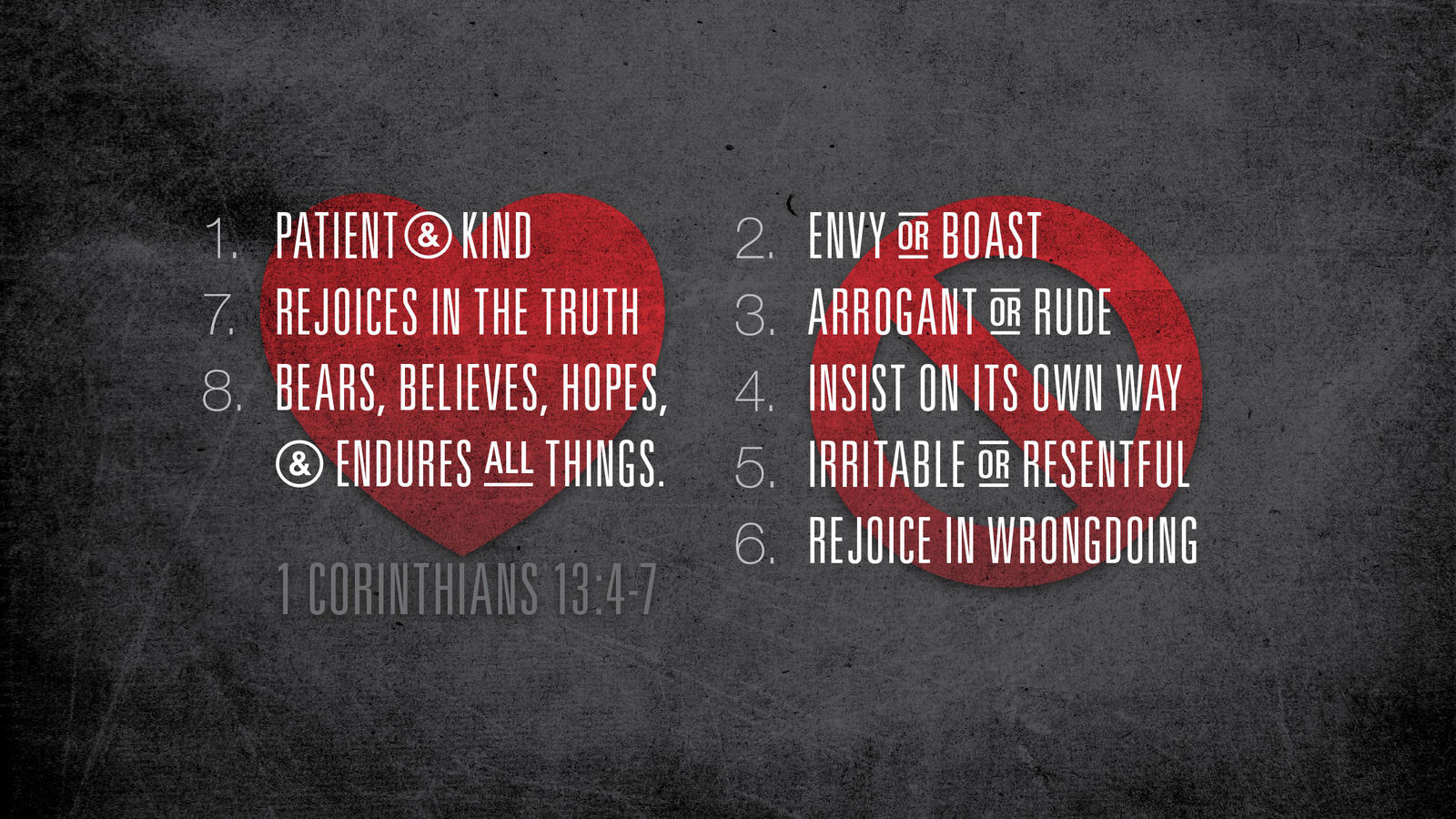
While I was reflecting on this problem a few months ago, it reminded me of 1 Corinthians 13.  I wrote my struggles into the text, not to elevate my thoughts to the level of Scripture, but to remind myself of the power of a passage quoted so often that I hear the words without thinking about what they mean.  Below, I’ve placed the original text in bold type with my added thoughts in normal type.

If I speak with the conviction of a great apologist, but have not love, I am a noisy gong or a clanging cymbal.

And if I have great powers of perception, and understand all science and philosophy, and if I have all faith, so as to inspire a congregation, but have not love, I am nothing.

A Response to My Facebook Newsfeed Today

If you’re unhappy about the supreme court decision, be a gracious loser, no need to be over the top and hassle people who disagree with you. If you’re happy about the supreme court decision, be a gracious winner, no need to be over the top and hassle people who disagree with you.

Facebook is a weird phenomenon with incredible power to make kind, reasonable people come off as very unkind and very unreasonable. Arguing in that kind of context has, in my humble opinion, a pretty low probability of substantively changing people’s minds. When my mind changes on things, it happens in a combination of reading books and having many face-to-face conversations.

That doesn’t mean no one should ever argue about politics on facebook, but most people shouldn’t because most people are terrible at it and they just shame themselves. I’m in that camp by the way. I get riled up, I end up having turf to defend, and I become something I don’t want to be, something very different from how I talk to people in person.

To anyone who wants to argue about politics on facebook anyway: please be very, very intentional about when and how you do that. Try very, very hard to be exactly who you are in person. Read your post out loud before you post it and delete it if it doesn’t sound like you. If you wouldn’t look a friend who disagrees with you right in the eyes and say it out loud, you will probably regret posting it.